Open world games are often praised for freedom, scale, and visual immersion. What interests me more is how some of them quietly demonstrate strong urban planning principles. As someone who pays attention to structure, circulation, and spatial logic, I often find myself studying digital cities the same way I would observe real ones.
A well designed open world is not just large. It is organized. It balances density, transportation flow, zoning logic, and environmental storytelling. The best examples feel believable because their planners, whether consciously or not, applied real world urban concepts.
Here are five open world games that stand out for mastering urban planning ideas.
1. Cities Skylines
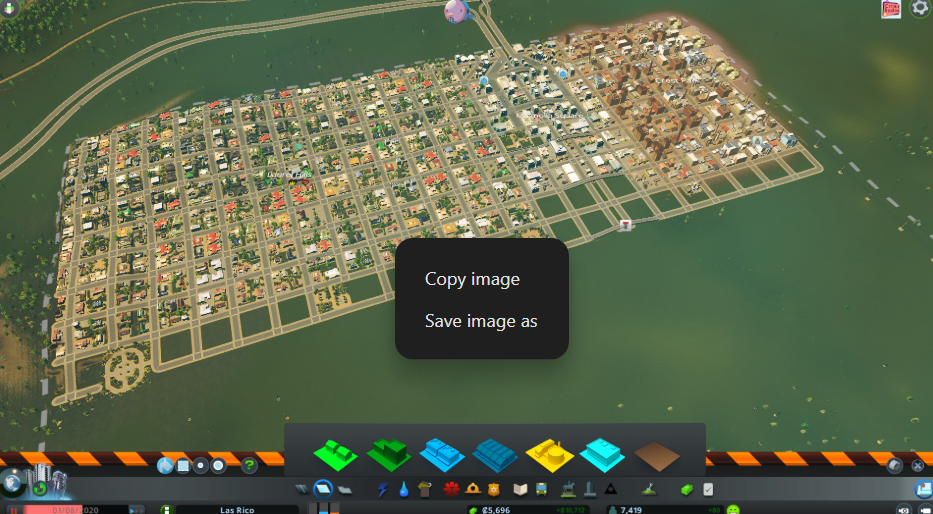
This one is the most obvious but also the most instructive. Cities Skylines is essentially a digital urban planning simulator. Players manage zoning, infrastructure, taxation, public services, and traffic systems.
What fascinates me is how closely it mirrors real planning challenges. Poor road hierarchy creates congestion. Lack of public transportation increases private vehicle dependency. Over zoning industrial areas near residential districts lowers land value and increases pollution.
The game quietly teaches concepts such as mixed use development, transit oriented design, and service distribution. Even basic ideas like grid layouts versus organic road networks have visible consequences.
Playing it feels less like gaming and more like experimenting with policy decisions in real time. The cause and effect relationship between planning choices and urban performance is remarkably clear.
2. Cyberpunk 2077
Night City is chaotic, dense, and vertically layered. At first glance, it feels overwhelming. But beneath the neon aesthetic lies a surprisingly coherent urban structure.
Districts have distinct identities and economic functions. Corporate zones differ dramatically from industrial outskirts. Residential density varies based on social class. Vertical stacking creates layered circulation systems, where highways, pedestrian paths, and elevated structures intersect.
What stands out is how the city communicates inequality through planning. Wealthy areas are spacious and controlled. Lower income zones are crowded and compressed. The design reflects socio economic segmentation, a concept often discussed in urban studies.
Walking through Night City, I often notice how vertical architecture reinforces power structures. Towers dominate skylines. Underpasses feel marginalized. The city tells its story through spatial hierarchy.
3. Grand Theft Auto V
Los Santos is heavily inspired by Los Angeles, and that influence is visible in its car centric planning. Wide highways dominate circulation. Suburban sprawl extends outward. Commercial districts cluster around major roads.
The game accurately captures zoning separation typical of American cities. Residential suburbs feel disconnected from industrial ports. Downtown areas concentrate high rise buildings and financial institutions.
From my perspective, what makes GTA V impressive is scale realism. Distances feel intentional. Travel time reflects infrastructure logic. Even minor elements such as beachside development and hillside housing follow recognizable planning patterns.
Despite being built for chaos and crime, the underlying city design feels grounded in actual urban modeling.
4. Watch Dogs Legion
Set in a near future London, Watch Dogs Legion recreates a dense European urban fabric. Streets are narrower compared to American inspired layouts. Public transit infrastructure is embedded naturally into the city.
What I appreciate is the emphasis on pedestrian scale. Landmarks anchor navigation. Historical architecture blends with modern surveillance technology. The layering of old and new creates continuity rather than fragmentation.
The game also reflects centralized urban planning, with visible security zones and restricted districts influencing movement patterns. Control is expressed spatially.
5. Assassins Creed Unity
Revolutionary era Paris in this game demonstrates how historical urban density shapes interaction. Buildings are tightly packed. Streets are narrow. Vertical traversal becomes essential.
Unlike sprawling modern cities, Unity’s Paris feels compressed yet interconnected. Rooftop pathways function almost like secondary circulation systems. Public squares act as gathering nodes. Monumental structures anchor orientation.
This reflects classic European city planning where plazas and landmarks organize urban identity. The density encourages vertical movement, turning architecture into gameplay mechanics.
Why Urban Planning Matters in Open Worlds

Open world immersion depends on more than graphical fidelity. It relies on believable structure. Transportation routes must make sense. District transitions must feel intentional. Density must reflect purpose.
When planning principles are ignored, cities feel artificial. When they are applied thoughtfully, players subconsciously recognize coherence.
From my experience exploring these digital cities, I have realized that game designers often act as urban planners. They balance aesthetics with function. They design circulation systems. They define social boundaries through spatial arrangement.
The most compelling open worlds are not just large maps. They are organized ecosystems. They reflect zoning logic, infrastructure strategy, and socio spatial relationships.
Digital cities may be fictional, but their planning determines how we move, explore, and engage within them.
In the end, strong urban design does not just shape real life communities.
It shapes virtual ones as well.